A sidebar made for the big screen
Your spaces and tabs are there when you want them, and out of your way when you don't.
 Browsa
Every layout is shaped by hand around how you hold it, open or closed. Native WebKit and open source, with no account and no analytics.
View on GitHub Coming to the App Store


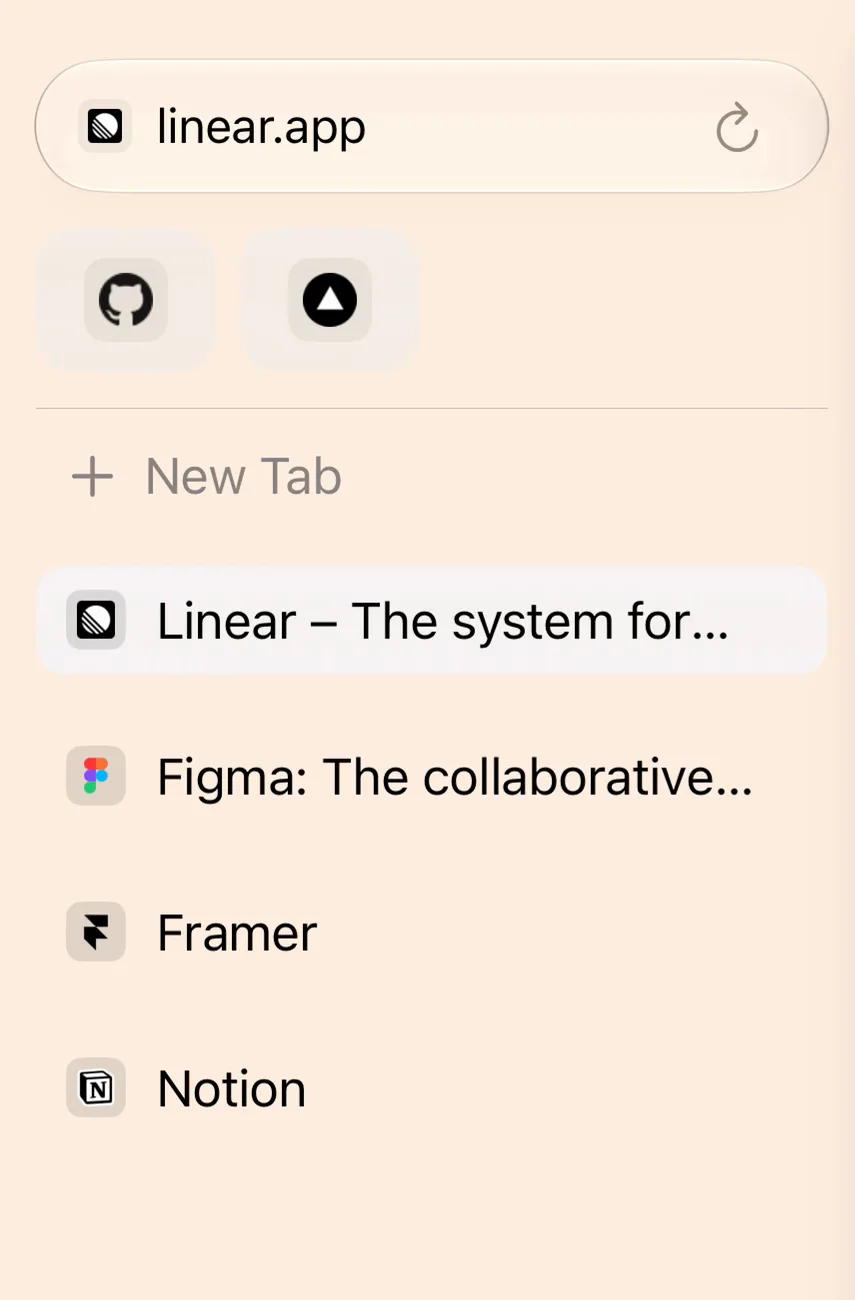
Your spaces and tabs are there when you want them, and out of your way when you don't.
Work and life each get their own tabs, pins and colour, so neither one follows you into the other.
Your favourites are waiting above the keyboard, and the places you go surface as you type.
Just the words and pictures, set so you can settle in.
The buttons you reach for live beside the page, never on top of it. Even a download gets its own quiet moment.
Made for one hand, with every tab a tap away and laid out so you can spot the one you want.
Held upright, the page gets the whole screen and the controls settle under your thumb.
No account and no analytics. Your tabs and history stay on your device, and Browsa blocks ads, trackers and cookie banners.
The privacy policy lists every service it talks to, like your search engine, and what each one receives.
Browsa's code is on GitHub under the MIT license. Read it, build it, or fork it into your own browser.
Browsa stands on other people's work: DuckDuckGo autoconsent (MPL 2.0) declines cookie banners and Readability.js (Apache 2.0) powers Reader. Motion from Transitions.dev. The blocking rules are built from AdGuard's filter lists and published under GPL 3.0, with their sources and license alongside them.